
Here’s a fun one to bring up at parties: the expiration date on your bottled water is a lie. Sort of. Water itself doesn’t go bad. It’s been around for a few billion years and it’s doing fine. But the water sitting in your basement for the apocalypse? That can absolutely go bad, and most people find out the hard way, usually by opening a jug that smells like a pool float.
Water is the most important thing you’ll ever store, and the thing people get wrong most often. So let’s fix that.
So what does the date on the bottle mean?
In the US, bottled water isn’t required to carry an expiration date at all. The date you see is mostly about the plastic and the taste. Over time, plastic can let in smells from whatever it’s stored near and leach a flavor into the water, especially if it gets warm. Sealed, commercially bottled water stored somewhere cool and dark stays safe well past that date. It just might taste like your garage.
How water you store yourself goes bad
Water you fill yourself is a different story. Bacteria and algae get in from unclean containers, hands, the air, or the tap water itself. Sunlight helps them grow. And some plastics break down or pass along chemical smells from nearby paint, gasoline or cleaning products, because plastic is more porous than it looks.
The fix is boring and effective:
- Use food-grade containers made for water storage, or clean soda bottles. Skip milk and juice jugs: the residue is nearly impossible to clean out, and the thin plastic is designed to break down.
- Sanitize first. Wash containers with soap and water, then swish a solution of one teaspoon of unscented household bleach per quart of water around inside, and rinse.
- Store it cool, dark and away from chemicals. Not next to the gas can. Not in the sunny window. Not in the hot attic.
- Label it and rotate it. Swap out water you bottled yourself about every six months. Write the date on the container so future you doesn’t have to guess.
How much do you actually need?
The standard recommendation is one gallon per person per day: about half for drinking and half for cooking and basic hygiene. Keep at least a three-day supply, and two weeks if you have the space. Then add more for pets, hot weather, illness, nursing, or anyone who’ll be doing heavy work. A family of four needs 56 gallons for two weeks, which is a lot more space than people expect, so start small and build.
Two water sources people forget they already have: the water heater, which holds 40 to 60 gallons in most homes and can be drained from the valve at the bottom, and the water already in your pipes. (Shut off the main valve first if the city water might be contaminated, so the dirty stuff doesn’t get in.)
When the water is questionable
If you’re not sure about water, treat it:
- Let it settle and filter it through a clean cloth or coffee filter if it’s cloudy.
- Boil it at a rolling boil for one minute, or three minutes if you’re above 6,500 feet.
- Or disinfect it with bleach if you can’t boil. For clear water, use 8 drops (about an eighth of a teaspoon) of plain, unscented bleach per gallon, stir, and wait 30 minutes. It should have a faint chlorine smell. Check the label: the right dose depends on the bleach’s strength, and scented or splash-less bleach isn’t safe for this.
None of this removes chemicals like fuel or pesticides, so water that smells of them should be avoided entirely. And if you’re building a homemade filter, read our notes on what a DIY sand-and-charcoal filter can and can’t do first.
Once your water is sorted, our pantry recipes will help you use it well.
So, honest question: how much water do you have stored right now, and when did you last check on it? Tell us in the comments. No judgment. (Some judgment.)
Free printable
Water Storage Calculator
Work out how much water your household needs for a go-bag and for two weeks at home, with storage rules and a rotation log.
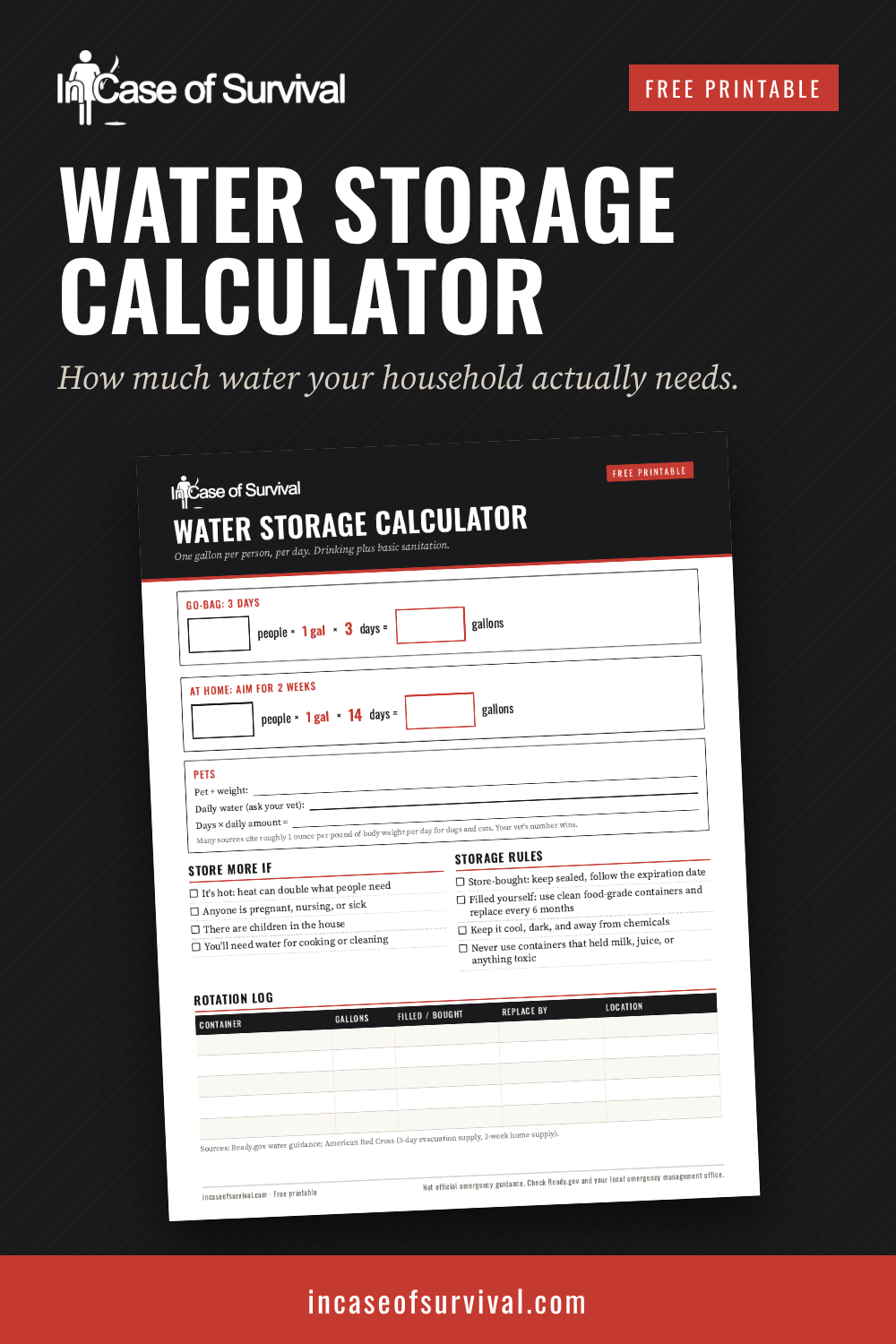
Photo by Mateusz Feliksik on Pexels